


PHILOSOPHY
Bridging Perspectives for Better Care
We started Parallax Circle because chronic, complex, and undiagnosed illness routinely falls into a gap that neither conventional medicine nor the wellness industry is built to close. Conventional care is often reactive, rushed, and slow to take unexplained symptoms seriously. Complementary and integrative care can offer real relief — but the industry also includes unlicensed practitioners, unproven claims sold as certainty, and providers who profit from patients' desperation.
We don't believe in choosing a side. We believe in combining what works: the evidence and infrastructure of conventional medicine, the whole-person lens of integrative care, and enough scrutiny to protect patients from being exploited by either system.

OUR CORE PRACTICE VALUES

WHOLE PERSON COORDINATION
Conventional and integrative medicine are usually run as separate systems that don't talk to each other, leaving patients to translate between them alone. We coordinate across both, combining conventional rigor with a whole-person perspective, so nothing falls through the cracks and nobody has to choose a side to get good care.

SELF ADVOCACY
COACHING
Chronic and complex illness often leaves patients dismissed, rushed through, or worn down by a system that was supposed to help them. We coach people to advocate for themselves in appointments, describe their symptoms in language providers take seriously, and rebuild the confidence that medical trauma erodes. This isn't about confrontation — it's about walking into the room as a partner instead of a patient waiting to be believed.

DEVELOPING WELLNESS LITERACY
Understanding is the first form of protection. We help people read evidence honestly — what's proven, what's promising, what's unproven but still worth trying under the right conditions, and what's simply a claim dressed up to sound like science — so they can ask better questions and spot red flags before those cost them time, money, or trust.
Our Story
After 15 years in the wellness industry, an ongoing battle with Long COVID, ME/CFS, and MCAS, and the process of leaving and deconstructing from a high-control spiritual group, Kim had had enough of seeing how people struggle and are harmed by unethical care. She had seen it all: patients who lost their lives as a result of side effects from unproven treatments, patients who developed OCD behaviors due to restrictive diets prescribed by untrained practitioners, and so many patients who simply struggled to understand and coordinate their care because the healthcare industry in the United States is so unbelievably broken. After completing her second Master's degree in Organizational Psychology, Kim started thinking bigger: how could I help patients find the care they needed without being scammed in the process? That's when patient advocacy came to mind. Patient advocacy brings together Kim's 15 years of experience as a provider who has worked within the insurance paradigm, Workers Compensation clinics, free clinics, and her private practice; her training as an Organizational Psychologist and Jungian life coach; and her passion for ethical, comprehensive care. Combined with Nurse Debbie's lifetime career as a hospital RN, the pair launched Parallax Circle to support patients who need support so they can focus on being a patient, not a project manager for their care.
Meet The Team
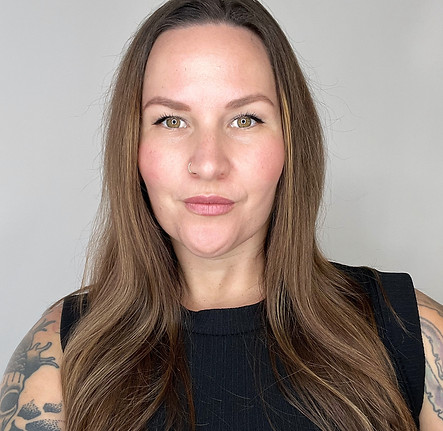
Kim Peirano, DACM, MSOP, LAc


Founder & Advocate
I've been a medical mystery for most of my life — a pattern of symptoms specialists could describe but rarely explain, and treatments that helped without ever adding up to an actual diagnosis. Getting real care meant becoming my own case manager: tracking symptoms, chasing referrals, and learning enough about my own physiology to push back when a provider's confidence outpaced their curiosity. Along the way, I also learned what it feels like to be taken advantage of by wellness practitioners selling certainty they didn't have — protocols that cost real money and delivered nothing. In 2018, mold exposure in my apartment triggered Mast Cell Activation Syndrome (MCAS) — though it would be years before anyone put a name to it. What followed was an escalating cascade of migraines and neurological symptoms that my neurologist downplayed rather than investigated. I spent the next several years researching my own case, assembling my own care team, and advocating my way into a workable, if informal, recovery. Then in 2024, COVID undid a lot of that progress: long COVID reactivated the same underlying dysfunction, worse and more complicated than before. I still don't have a unifying diagnosis. What I have is a care team and a set of protocols that keep me stable and functioning. My understanding of exploitation in wellness spaces isn't only clinical — it's academic and personal. I hold a Master's in Organizational Psychology with a research focus on coercive control, work that began after years spent in a high-control spiritual community where physical illness was treated as a moral failing rather than a medical reality. That gave me an early, uncomfortable education in how "healing" language can be used to shame, isolate, and extract money from people who are already vulnerable. As the wellness industry has grown — and as the pandemic accelerated both its reach and its misinformation — I've watched the same dynamics play out at scale: patients steered away from treatment they needed, others developing real psychological harm from restrictive protocols, families missing milestones over "cleanses," people taking out loans to pay providers with no license of any kind. None of that means integrative and complementary medicine is the problem. I believe ethical CAM providers exist, and that plenty of unproven modalities — energy work included — can genuinely help when used honestly, by the right practitioner. What patients need are the tools to tell the difference between a provider who's transparent about uncertainty and one who's exploiting it. That's what Parallax Circle is for: integrative providers vetted with the same rigor as conventional ones, so people can make informed choices instead of desperate ones. I bring 16 years of full-time clinical practice as a Doctor of Acupuncture and Chinese Medicine, faculty experience at AIMC Berkeley, and training in integrative medical hypnotherapy. But Parallax Circle isn't built on credentials alone. It's built on having sat on every side of this: the provider trying to make sense of a complex case, the patient trying to get someone to listen, and the survivor of a system that used "healing" as a means of control.
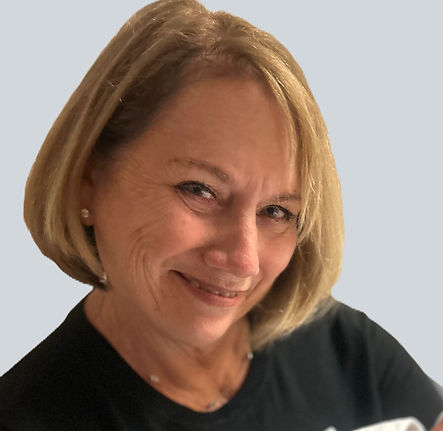
Debbie Peirano, RN
Consultant & Advocate
Collapsible text is great for longer section titles and descriptions. It gives people access to all the info they need, while keeping your layout clean. Link your text to anything, or set your text box to expand on click. Write your text here...